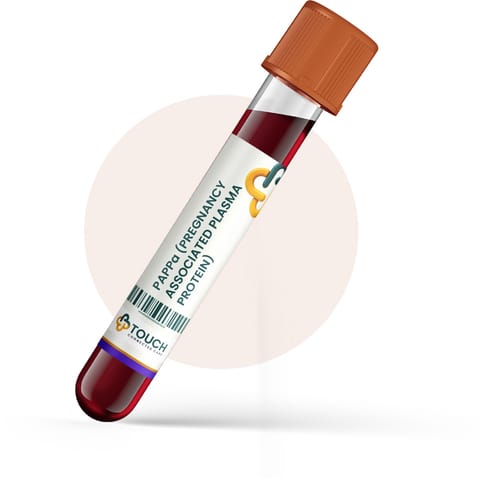
PAPPa (PREGNANCY ASSOCIATED PLASMA PROTEIN)
 59930 min
Author Details
Written By
Dr. Arjun Nair
MD (Internal Medicine)
Supervised By
Dr. Kavya Reddy
MD (Biochemistry)

Adult / Pregnancy



PAPPa (PREGNANCY ASSOCIATED PLASMA PROTEIN)
At-home PAPP-A test for early pregnancy screening and risk assessment—convenient blood collection and accredited lab reporting across Dubai and the UAE.
Trending Lab Tests24
Nowadays Most Common in Demand
 1099
 1299
 249
 599
 1999
 999
 2999
 499
 1399
 749
 749
 1188
 619
 149
 799
 449
 3100
 1299
 299
 249
 1549
 1549
 619
 499
Know More About PAPPa (PREGNANCY ASSOCIATED PLASMA PROTEIN)
PAPP-A (Pregnancy-Associated Plasma Protein A) is a maternal serum protein produced by the placenta that is measured in the first trimester to help assess the risk of certain chromosomal conditions and adverse pregnancy outcomes. The PAPP-A test quantifies circulating PAPP-A levels and is typically interpreted alongside gestational age, maternal age, and other first‑trimester markers (for example, free beta‑hCG and nuchal translucency) to generate a risk estimate rather than a definitive diagnosis. Touch Connect offers at‑home venous blood collection across Dubai and the UAE with analysis performed in accredited laboratories and secure electronic reporting to assist early prenatal risk assessment and clinical decision‑making.
Parameters Measured
- Pregnancy‑Associated Plasma Protein A (PAPP‑A)
- PAPP‑A Multiple of Median (MoM)
- Gestational age reference for result normalization
- Risk estimate for common chromosomal anomalies (combined with clinical data)
When to Test it?
- First‑trimester screening—ideally between 11 and 13+6 weeks gestation
- When performing combined screening with nuchal translucency ultrasound
- If maternal age is ≥35 or other aneuploidy risk factors exist
- After an early ultrasound suggests increased risk or abnormal markers
- When planning counselling about further diagnostic testing (CVS or amniocentesis)
We take all safety and hygiene measures to keep our customers safe
You can access your health records online and download them all at one place
Experienced doctors now available for both Online and Walk In consultations
Our prices for doctor consultations and diagnostics are the best in the business
Benefits Includes:
- Early, non‑invasive risk assessment for chromosomal abnormalities
- Convenient at‑home blood collection by certified phlebotomists across Dubai/UAE
- Analysis by accredited laboratories with standardized reporting (MoM values)
- Fast electronic delivery of results and integration with clinical findings
- Supports timely counselling and decisions about follow‑up diagnostic testing
Doctor Recommended Checkups


Test requirements:
- At‑home venous blood collection by a certified phlebotomist
- Test performed between 9 and 13+6 weeks (preferably 11–13+6 weeks) of pregnancy
- No fasting required; remain hydrated prior to sample collection
- Provide accurate LMP or ultrasound gestational age and maternal details (age, weight, singleton/multiple pregnancy)
Author Details
Written By
Dr. Arjun Nair
MD (Internal Medicine)
Supervised By
Dr. Kavya Reddy
MD (Biochemistry)
Ratings & Reviews




Download our app!
Download Touch Connect app.
#1 healthcare app, at your fingertips
Book doctor at home, iv drips, lab test, physiotherapy and much more. AI power health insights